
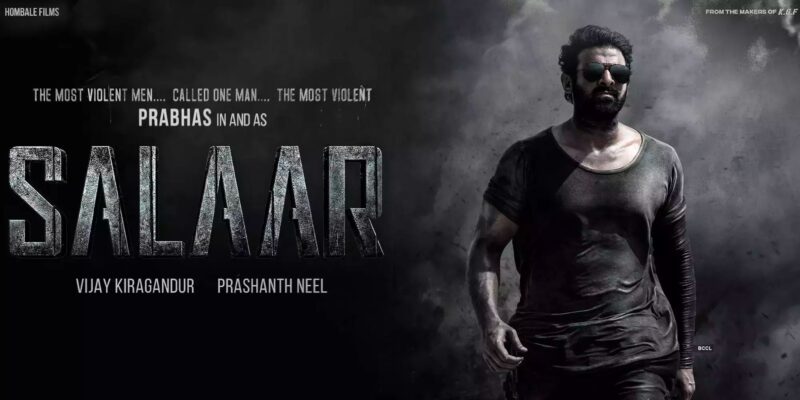











Salaar Film Review: Titled ‘Salaar Part One,’ this cinematic spectacle echoes ‘KGF’ in its grandeur, only amplified and bloodier. Drenched in a color palette of black tinged with red, the film boasts a relentless appetite for violence, with an increased body count. In this action-packed narrative, Prabhas and Prithviraj, childhood best friends turned formidable warriors, embark on a journey to carve through flesh and decapitate their foes. Prashanth Neel, the director, exhibits a penchant for bloodshed that cannot be overlooked.
However, Neel’s prowess in world-building shines through, introducing the fictional outpost of ‘Khansaar’ in India. Governed by a ruthless king, portrayed by Jagapathi Babu, who ascended the throne by vanquishing rival tribes that had coexisted for a millennium, ‘Khansaar’ stands as a testament to Neel’s imaginative prowess.
Similar to KGF, the film features opulent palaces and humble hovels, with ruling elites in one and destitute women in red garments in the other, destined to mourn when chosen to be defiled by a vile ruler. While a segment offers a form of retribution, it comes at the cost of discomfort as the film navigates through disturbing scenes.
Predictably, the female characters play stereotypical roles, from wide-eyed damsels in distress like Shruti Haasan to long-suffering maternal figures like Easwari Rao. Even the king’s daughter, played by Sriya Reddy, takes a backseat when the central conflict unfolds between the two male protagonists, Deva (Prabhas) and Vardha (Prithviraj Sukumaran).
The film derives its emotional weight from the bond between the leading men, reminiscent of epic duos like Krishna-Sudama. Prabhas, with his imposing ‘Bahubali’ physique, starts off stoic but gradually reveals nuances in his performance. Meanwhile, Prithviraj, with a more intricate role, delivers a compelling portrayal that captivates whenever the duo shares the screen.
The violence, although stylized in a comic-book and ‘Games of Thrones’ fashion, desensitizes the audience to the mayhem. Prashanth Neel’s universe presents a dystopian portrayal of powerful Indian leaders operating beyond the reach of the state, a theme reminiscent of KGF. The inclusion of a global militia, drawn from war-torn regions like Russia and Sudan, adds a surreal element to ‘Khansaar.’
As Salaar Part 2 looms on the horizon, the question arises: are audiences prepared for an escalation of the existing intensity? While Part One leaves viewers somewhat numb to the constant onslaught of murder and chaos, the lingering question remains — is it all just noise, ultimately signifying very little?
FAQs
Is Salaar Part One similar to KGF?
Yes, Salaar Part One echoes the grandeur and violence of KGF but is portrayed on a larger scale.
What is the fictional setting of the film?
The film is set in ‘Khansaar,’ a fictional outpost in India, ruled by a ruthless king.
How are female characters portrayed in the film?
Female characters, with few exceptions, play stereotypical roles, ranging from damsels in distress to long-suffering maternal figures.
What is the central conflict in Salaar?
The film revolves around the deep bond between two childhood friends turned warriors, Deva (Prabhas) and Vardha (Prithviraj Sukumaran), and the conflicts arising from their actions.
What can viewers expect from Salaar Part 2?
Salaar Part 2 promises an escalation of the existing intensity, leaving the audience to ponder whether they are ready for more action and chaos.


