
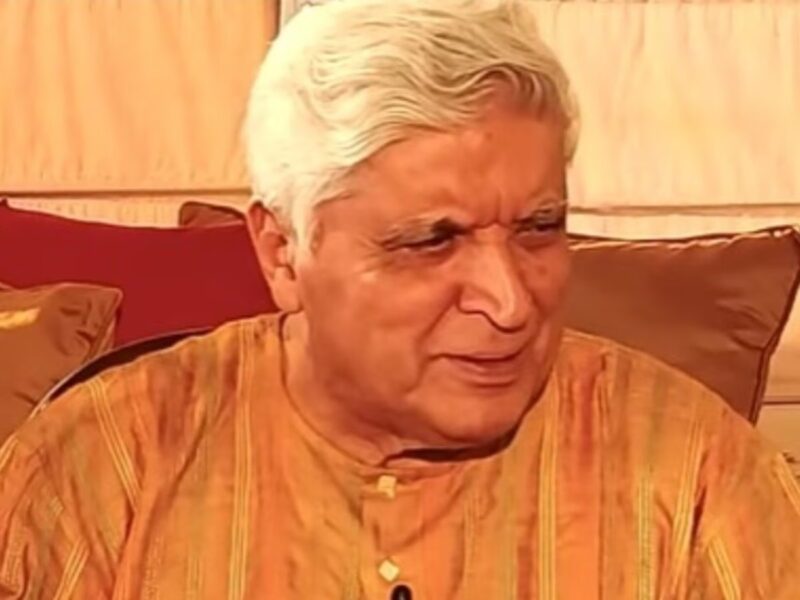










Renowned Indian poet and lyricist, Javed Akhtar, has voiced his support for the Uniform Civil Code (UCC), asserting that he stands by its principles both theoretically and in practice. In a recent podcast discussion, Akhtar criticized those who advocate for the UCC out of animosity towards Muslims, emphasizing the need for a fair and equal implementation of such laws. He didn’t shy away from addressing controversial topics like public prayers on the streets.
Understanding Communism from Childhood
Akhtar reminisced about his childhood in Gwalior, where encounters with communist ideologies shaped his early years. He narrated an amusing incident where a friend, influenced by communism, read the Communist Manifesto into Akhtar’s ears as a child. Akhtar also shared anecdotes about his family’s mistaken belief that Stalin was their grandfather, highlighting the complexities of ideological understanding within his upbringing.
Preparation for Revolutionary Ideas
From his youth, Akhtar exhibited a rebellious streak, preparing himself mentally for potential incarceration due to his revolutionary inclinations. He recounted how, as a child, he indulged in eating spicy food, anticipating that jail food would be equally fiery, as per popular belief.
Stance on Public Prayers
Recently, a video of police dispersing individuals praying on public streets went viral, sparking debates on social media. When asked for his reaction, Akhtar expressed disapproval of public prayers on roads, stressing that if space is limited, authorities should be approached for designated areas rather than resorting to streets. However, he also criticized the heavy-handed approach of the police in handling such situations.
Perceptions and Polygamy
Addressing perceptions surrounding the UCC, Akhtar emphasized that it shouldn’t be used as a tool to target Muslims. He candidly remarked on the jealousy Hindus may harbor towards Muslims due to the allowance of multiple wives, questioning whether this envy is the driving force behind calls for a UCC. Akhtar also raised concerns about illegal polygamous marriages within Hindu communities, advocating for equal rights for women, including his own daughter.
Javed Akhtar’s outspoken views on social and political issues reflect a commitment to fairness and justice. While he supports the UCC’s principles, he stresses the importance of its unbiased application and challenges societal biases regarding religious practices and gender equality. His narratives offer insights into the complexities of Indian society and the ongoing dialogue surrounding communal harmony and legal reform.


