
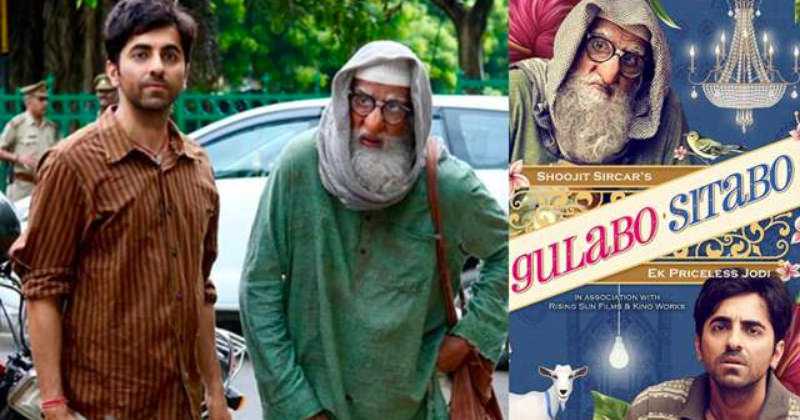













Cast: Amitabh Bachchan, Ayushmann Khurrana, Vijay Raaz, Brijendra Kala, Shrishti Shrivastava, Farrukh Jafar
Director: Shoojit Sircar.
Rating: 3.5 stars (out of 5)
Gulabo Sitabo’s narrative, as all the advertising material had told us, has two poles. One, a stingy 78-year-old ‘owner’ of a Lucknow haveli of undetermined provenance. The other, a particularly intransigent tenant determined not to leave the premises no matter what. They argue all the time. It is not a pretty sight. But it’s fun, especially when the writing is mixed with crazy wit.
Gulabo Sitabo, released as “Amazon presents a Prime Video release”, does a good job of capturing the ups and downs of the fight between the men, whose cards are laid out on the table, and thus there is no ambiguity about what they are up to. . But neither of them, nor, of course, the public, knows how everything will turn out for them and the building in which they live. And that keeps the level of intrigue high in Shoojit Sircar’s new comic drama.
The two main characters in the delightfully twisted Gulabo Sitabo are always at odds, but the trait they share, a selfish love for the crumbling Fatima Mahal, a mansion that will sow fairly quickly, forms the backbone of the story.
The understated and unworthy treatment of the core conflict, which, as the film progresses, creates room for two other key players with their earned sets of vested interests, might seem to be at odds with the comic spirit of the plot.
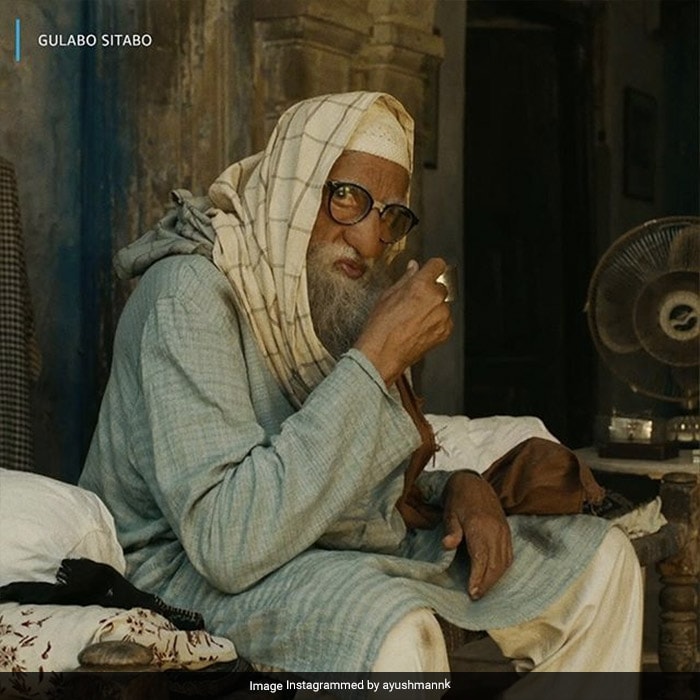
With the actors giving everything to the movie: Amitabh Bachchan’s withered, hunchbacked and curmudgeon act is the main driver: Gulabo Sitabo works even when not much seems to happen on screen or the characters are going through the bush.
The best thing about Gulabo Sitabo, written by Juhi Chaturvedi, is that he is not trying to be a scream. Humor is born from language and the way it is delivered. It won’t have you rolling on the floor. But it will spark soft laughter every time Mirza (Bachchan) and Baankey Rastogi (Ayushmann Khurrana) clash with each other over petty matters that slowly get out of control.
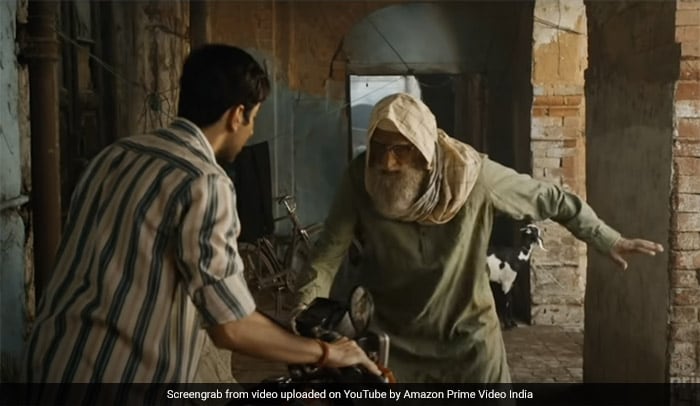
Mirza and Baankey will not give an inch to each other, but fate has a way of asserting itself. In Mirza’s case, he is represented by his Begum (Farrukh Jafar), who is a decade and a half older than him but is not aggressive. For Baankey, who owns an Atta Chakki in town, fate takes the form of bricks in a wall that give way when he is kicked out in exasperation by a leasing partner who takes longer than usual in the bathroom.
Baankey, who speaks with a pronounced lisp, is a dropout from school who has not been given a helping hand by life. It is understandably bitter and insolent. His father is dead. So is a paternal aunt. He lives in a ramshackle part of the building with his mother and three sisters. One of his brothers, the Guddo (Shrishti Shrivastava), who goes to university, is very far from the shy Hindu film sisters involved. She is a handful in more ways than one.
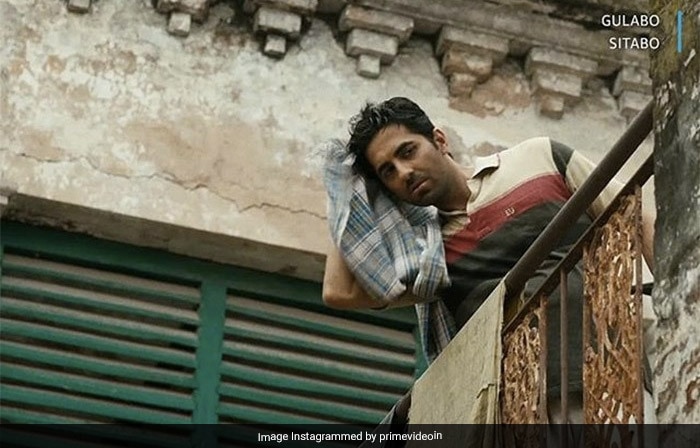
Mirza’s complaint is that the tenants are parasites. They pay insignificant rents. He hopes to get rid of all of them forever. But residents have other ideas and, encouraged by Baankey, they decide to fight to the end, for better or for worse.
Greed is zehar (slow poison), Baankey tells Mirza. No one has died of greed, the latter replica. This exchange comes quite late in the movie, but on the way here the two men don’t miss the chance to muddy the waters. They are aided in this effort by two others who thrive in troubled waters fishing: an officer from the archeology department, Gyanesh Shukla (Vijay Raaz), and a lawyer in disputed property cases, Christopher Clarke (Brijendra Kala).
Gulabo Sitabo: The title is a nod to a form of traditional Uttar Pradesh native glove puppets in which the wife of a harassed man (Sitabo) and his spoiled lover (Gulabo) argue endlessly, about a fading past. quickly, a present that is shrouded in uncertainty and a future that seems unlikely to generate dividends for those who have no control over changing times.
A real-life puppeteer (Mohammed Naushad) acts at different points in the film. It is a metaphor for men with ropes. He is also an exponent of a centuries-old form that is dying. His presence enhances the film’s earthiness while serving as a commentary on the broader truths surrounding Mirza, Baankey, and Lucknow.
Gulabo Sitabo is about ordinary people who resort to desperate measures hoping to improve their luck. However, like the ruined building in the center of the film, nothing is what it seems and nothing they do produces the desired results.
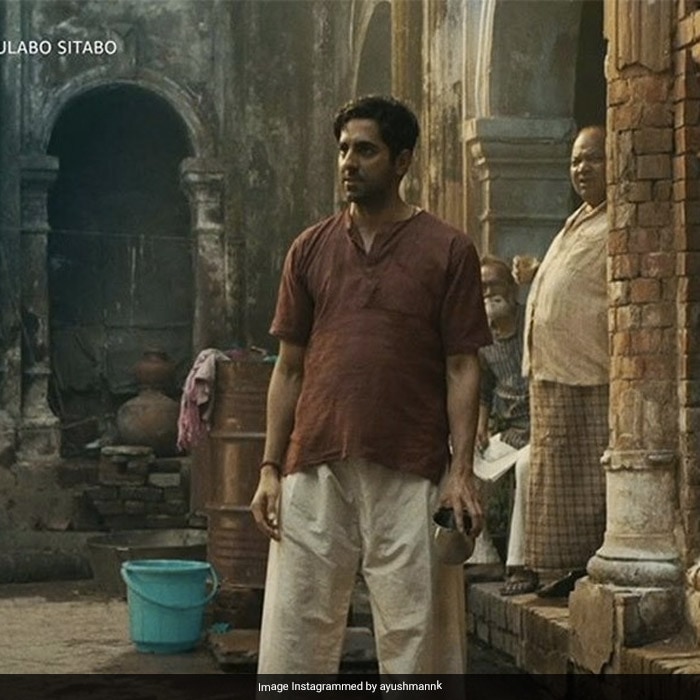
The sights and sounds of a city and the haveli, both the façade and its decaying interiors, filmed evocatively in daylight and in low-light night shots by cinematographer Avik Mukhopadhyay, are a vital presence that helps define the drama outlines. The editor Chandrashekhar Prajapati also correctly captures the staccato rhythms of the place: it is a city that fluctuates between a slow rhythm and sudden bursts of activity.
When someone, with all the courtesy at his command, says to Mirza “Aainda apni shakal dikhane ki taqleef na karein (Never bother to show us your face again)”, you know that you are in Lucknow. Elsewhere, the word taqleef (problem) would probably be replaced by jurrat (daring). The representation of a city as a living organism gives Gulabo Sitabo an additional dimension.
Both Vijay Raaz, as effortless as ever, Brijendra Kala are great. Shrishti Shrivastava deserves a special mention. Last but not least, Farrukh Jafar is an absolute delight.
Gulabo Sitabo has parts that are a bit confusing, but the way the film builds on its quirky main premise, pokes fun at idiosyncratic little detours, Lucknow’s language cadences, and two wonderful pivotal star turns give it an external touch . plate of the ordinary.


