
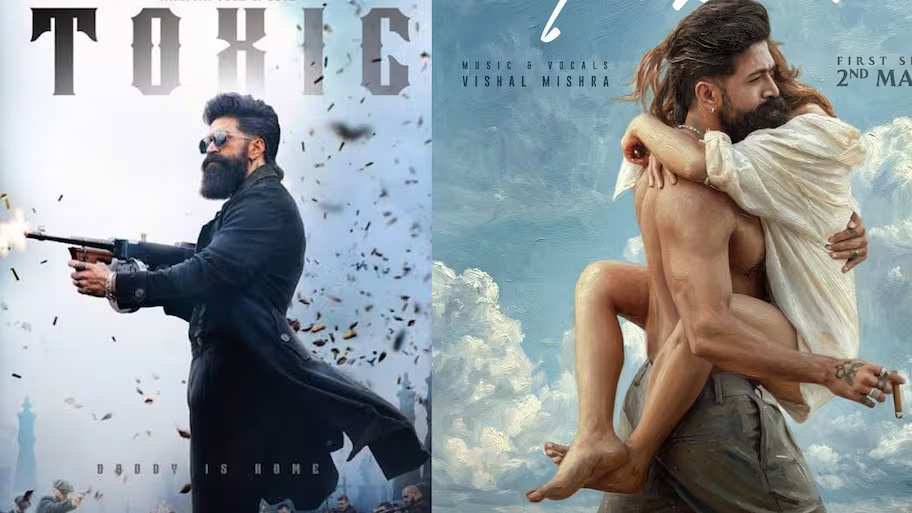













The cinematic release of ‘Toxic’ marked one of the most anticipated moments in recent South Indian cinema, ending a grueling four-year wait for fans of superstar Yash. Following unprecedented buzz and massive pre-release hype, the action thriller delivered impressive initial figures at the theatrical box office on day one. However, despite a strong financial opening, the immediate reaction from moviegoers and critics has been surprisingly divided.
As audiences stream out of theaters, public opinion remains sharply polarized, with a significant section of viewers voicing disappointment over the final product. In this comprehensive Yash Toxic film review analysis, we break down the major factors contributing to the film’s lukewarm reception and critical pushback.

Critical Insights from the Yash Toxic Film Review Debate
While expectations were sky-high for Yash’s return to the big screen, early viewer feedback suggests that the ambitious project struggles under the weight of its own grandeur. Industry observers note that while the visual presentation attempts a sophisticated tone, the underlying execution falls short in several key artistic departments.
The contrast between the film’s commercial performance and its narrative reception highlights a growing disconnect between high-octane marketing and audience satisfaction. While die-hard fans appreciate the lead actor’s screen presence, broader audiences have expressed frustration regarding structural and thematic choices.

Overemphasis on Forced Hyper-Masculinity
A primary point of contention among critics is the film’s persistent effort to project an extreme hyper-masculine persona. The narrative relies heavily on forced alpha-male tropes, punchy rhyming dialogues, and stylized action set-pieces that often feel unnatural within the scene context.
This relentless pursuit of mass appeal appears to backfire, as the heavily engineered swagger overrides genuine emotional storytelling. Rather than allowing character motivations to drive the drama, the film frequently relies on superficial posturing and repetitive hero-worship sequences.
The Conflict Between International Style and Mass Tropes
Another major flaw highlighted in early reviews is the film’s awkward blending of distinct cinematic styles. The director attempts to merge slick, international-style filmmaking with traditional high-voltage mass entertainer elements.
Unfortunately, this stylistic fusion fails to form a cohesive vision. Instead of creating a unique hybrid genre, the forced synthesis weakens both the overarching storyline and the depth of individual characters, leaving the narrative feeling fragmented and confused.

Narrative Fragmentation and Choppy Editing
Technical shortcomings have also drawn widespread criticism from both seasoned film reviewers and casual viewers. The editing style, described as jarring and inconsistent, severely hampers the pacing and dramatic flow of the feature.
Rather than delivering a smooth cinematic progression, the storyline feels scattered across various disconnected episodes. Key plot points are glossed over, while less impactful moments are stretched out, leaving audiences struggling to remain emotionally invested in the protagonist’s journey.
Controversial Portrayals and Dialogue Choices
Beyond structural issues, the movie has sparked debate over its thematic elements and character portrayals. Audience members have called out scenes deemed vulgar or unnecessarily gratuitous, which detract from the primary plotline.
Furthermore, the portrayal of female characters within the screenplay has faced scrutiny for lacking agency and depth. Critics argue that these roles exist largely as background props or romantic foils, reinforcing outdated tropes rather than offering meaningful character development.
As ‘Toxic’ continues its theatrical run, its ultimate box office trajectory will depend on whether fan enthusiasm can overcome the mixed word-of-mouth. While Yash’s star power guarantees significant initial viewership, the ongoing debates surrounding its narrative execution reveal an audience that increasingly demands substance alongside spectacle.


